When damp stains appear on ceilings beneath bathrooms, accurate and non-invasive shower leak detection Fort Lee NJ homeowners and condominium residents rely on eliminates destructive guesswork. In a borough known for luxury high-rise master bathroom renovations along Palisade Avenue and classic tiled homes in Coytesville, bathroom moisture can stem from numerous concealed sources. Between pressurized valve bodies, subfloor drainage traps, waterproof pan membranes, and cosmetic tile grout, isolating the true failure mechanism requires structured testing before anyone breaks expensive marble or tile.
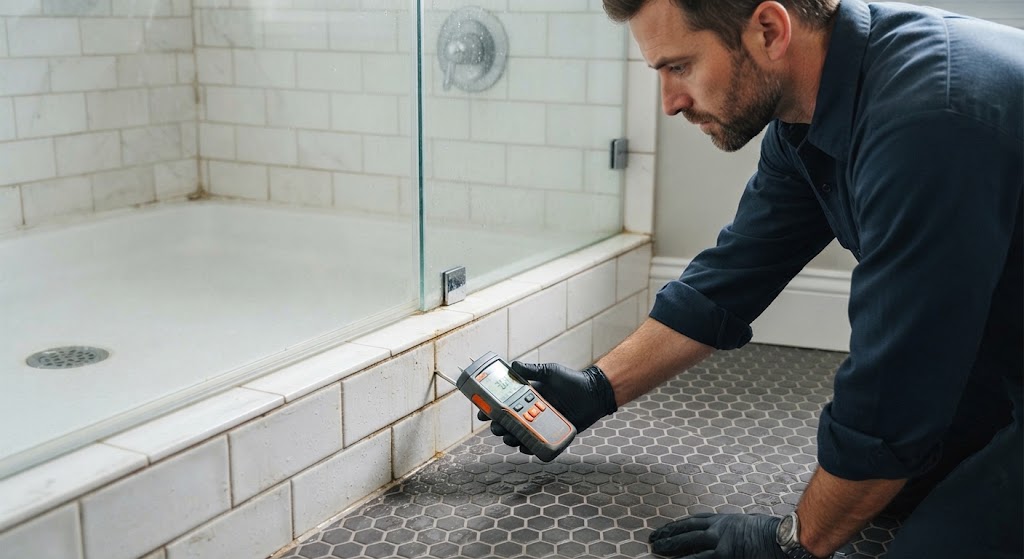
Common Bathroom Water Leak Sources in Fort Lee
Bathrooms contain the highest density of plumbing connections in any residential or commercial building:
- Shower Pan Membrane Failure: Chloraloy or PVC liners underneath mortar beds crack over time due to building settling, nail punctures, or failed weep holes, leading to a concealed shower pan leak Fort Lee residents often mistake for a pipe leak.
- Failed Tub Drain Flanges & Shoe Assemblies: Vibrations and subfloor deflection loosen the rubber gasket beneath bathtubs, causing a persistent leaking tub drain Fort Lee homeowners notice on the ceiling below whenever the tub empties.
- Concealed Mixing Valve Leaks: Pressure-balancing or thermostatic shower mixing valves inside wall cavities develop cartridge seal fatigue, weeping water behind tile backer board whenever the shower is turned on.
- Compromised Toilet Wax Rings: Rocking toilet fixtures deform wax gaskets, allowing wastewater to seep between the subfloor and finished porcelain with every flush.
- Failed Grout & Caulk vs. Plumbing Leaks: Micro-cracks along tile perimeters allow surface water to soak into cement board, distinct from pressurized pipe breaches.
Seeing Ceiling Discoloration Underneath a Bathroom?
Don't tear out expensive custom tile prematurely. Our systematic isolation testing identifies the exact culprit.
Call (201) 510-1615Diagnostic Protocol: How We Isolate Bathroom Leaks
To distinguish between pressurized supply pipes, unpressurized drainage assemblies, and waterproof membranes, we follow an exacting scientific protocol:
-
Ceiling Thermography & Baseline Moisture Mapping
We scan the ceiling below the bathroom using infrared thermography and digital pinless moisture meters to map current saturation boundaries.
-
Static Pressure Testing on Supply Lines
We test hot and cold supply lines feeding shower valves and vanity sinks to verify whether pressurized pipes are holding airtight pressure.
-
Pneumatic Hydrostatic Pan Flood Testing
We plug the shower drain opening with an inflatable pneumatic test plug and fill the basin with two inches of water, isolating the waterproof liner from the drain pipe to verify pan integrity.
-
Drain Flange & Overflow Isolated Pour Testing
We pour water directly down bathtub and shower drains through a funnel to test waste-and-overflow assemblies without wetting surrounding tile surfaces.
Need Clear Diagnostic Answers for Your Bathroom?
Protect your custom stone, tile, and cabinetry. Speak directly with a bathroom leak specialist today.
Call (201) 510-1615Grout & Caulk Failure vs. True Plumbing Pipe Leaks
Many property owners assume that any moisture behind a shower wall requires repiping. However, there is a fundamental difference in behavior:
| Diagnostic Characteristic | Pressurized Pipe Leak | Shower Pan or Drain Leak | Failed Grout / Caulk Seam |
|---|---|---|---|
| Frequency of Dripping | Constant 24/7 drip or hissing | Drips only during or shortly after use | Drips only after prolonged shower spray |
| Water Meter Activity | Meter spins when fixtures are off | Meter completely stationary | Meter completely stationary |
| Thermal Signature | Distinct localized thermal plume | Broad cooling on subfloor deck | Faint surface moisture on drywall |
| Remediation Path | Surgical pipe section solder or crimp | Pan liner replacement or drain gasket reset | Epoxy re-grouting and silicone recaulking |
When you need comprehensive bathroom leak detection Fort Lee specialists provide the rigorous data needed to avoid unnecessary tile demolition. If testing confirms a pressurized pipe issue inside the wall, review our hidden water leak detection protocols. In multi-unit buildings along Palisade Avenue, inter-floor water migration can also be cross-referenced on our condo & apartment leak detection page.
What Happens After the Bathroom Leak Is Identified
Once our diagnostic testing identifies the exact failure point, you receive a concise summary outlining whether the problem is mechanical plumbing, waterproof membrane failure, or architectural caulking.
In New Jersey, plumbing repairs require a NJ licensed master plumber to rebuild shower valves, install new tub waste-and-overflow shoes, or execute code-compliant drain connections.
Preventative Maintenance for Fort Lee Bathrooms
Avoid costly bathroom water damage with simple preventative habits:
- Inspect silicone caulking along the junction where tub or shower thresholds meet finished flooring every six months, replacing deteriorated sealant immediately.
- Never use harsh acid-based chemical drain cleaners, as they erode brass drain shoe threads and corrode rubber overflow gaskets.
- Check for wobbling or rocking toilet bowls. Any movement breaks the airtight wax seal, demanding an immediate wax ring reset before subflooring rots.
When Is a Bathroom Leak an Immediate Emergency?
If water is actively streaming through ceiling fixtures, ceiling drywall is bowing heavily, or an overflowing toilet is flooding an upper floor, treat it as an emergency. Shut off the fixture stop or the home's main water valve immediately, switch off circuit breakers to affected rooms, and call our team for urgent guidance.
Explore our Fort Lee service areas to learn how our diagnostic technicians support residences in Downtown Fort Lee, Linwood Avenue, and nearby towns, or return to our overview on leak detection in Fort Lee.
Frequently Asked Questions
How does a hydrostatic flood test identify a shower pan leak?
The technician temporarily plugs the shower drain opening with an inflatable pneumatic test plug and fills the pan basin with two inches of standing water. If water levels drop while the drain plug holds, or moisture sensors detect water under the subfloor, the waterproof pan liner is confirmed to be breached.
How do you tell the difference between bad grout and a leaking pipe?
Pressurized pipe leaks run continuously regardless of bathroom use, causing steady water meter movement and persistent thermal anomalies. Grout and caulk leaks only produce moisture when water splashes against wall tile during an active shower.
What causes water stains on the ceiling directly below a second-floor bathroom?
Common culprits include a deteriorated toilet wax ring seal, a loose bathtub drain flange gasket, a cracked shower pan membrane, or a leaking mixer valve behind the tiled shower wall.