When dealing with unexplained moisture or damp spots, specialized water leak detection Fort Lee NJ homeowners rely on prevents extensive structural degradation. In a borough where modern luxury condominiums tower above vintage residential streets near Fort Lee Historic Park, concealed water leaks present serious challenges. Water escaping behind walls rarely reveals itself at its point of origin. Instead, pressurized water tracks along floor joists, structural steel beams, and concrete slabs before manifesting as a ceiling stain or bubbling drywall several yards away.
Warning Signs of a Concealed Water Leak
Concealed plumbing leaks in residential properties often run silently for weeks before causing visible cosmetic stains. Look for these clear warning signals:
- Rising Water Utility Invoices: Experiencing a sudden high water bill leak Fort Lee NJ utility customers often notice is one of the clearest signs of pressurized line loss.
- Water Meter Movement While Idle: The low-flow leak detection indicator dial continues turning even when every fixture, toilet, and washing machine is shut off.
- Damp, Discolored Drywall & Warped Baseboards: Soft plaster, paint blisters, or discolored rings on ceilings or partition walls.
- Persistent Musty Odors & Mold Spores: Trapped moisture behind enclosed sheetrock fosters mold growth, emitting a damp basement smell in upper-floor living areas.
- Warm or Cool Spots on Hard Flooring: Localized floor temperature variations often signal a leaking hot water line or hydronic heating pipe embedded beneath finished surfaces.
- Acoustic Pipe Hissing: Hearing faint running water or hissing noises inside walls when nobody is running a faucet.
Seeing Moisture Stains or Unexplained Water Usage?
Don't let water damage spread through wall framing. Schedule non-invasive acoustic and thermal testing today.
Call (201) 510-1615Why Hidden Leaks Occur Across Fort Lee Properties
Fort Lee's unique architectural landscape influences how concealed leaks develop. In older single-family homes throughout Coytesville and near Linwood Avenue, copper plumbing lines installed decades ago are reaching the end of their operational lifecycle. Pinhole corrosion caused by water chemistry or chemical flux creates microscopic sprays that stay trapped inside stud bays.
Furthermore, severe North Jersey winter freeze-thaw cycles subject pipes in unheated exterior overhangs and rim joists to thermal expansion stress. In high-rise co-ops and towers near Palisade Avenue and Route 4, vertical water risers experience thermal movement and pressure surges, eventually leading to fitting fatigue. When dealing with a complex leak behind wall Fort Lee properties experience, opening walls randomly damages finished millwork without guaranteeing you will find the source.
Our Step-by-Step Non-Invasive Detection Process
We employ a structured scientific workflow to locate concealed moisture breaches without unnecessary wall demolition:
-
System Pressure Isolation Testing
We test municipal supply pressure at key fixtures to confirm whether the leak stems from hot supply, cold supply, or an unpressurized drainage branch.
-
Thermal Imaging & Surface Temperature Mapping
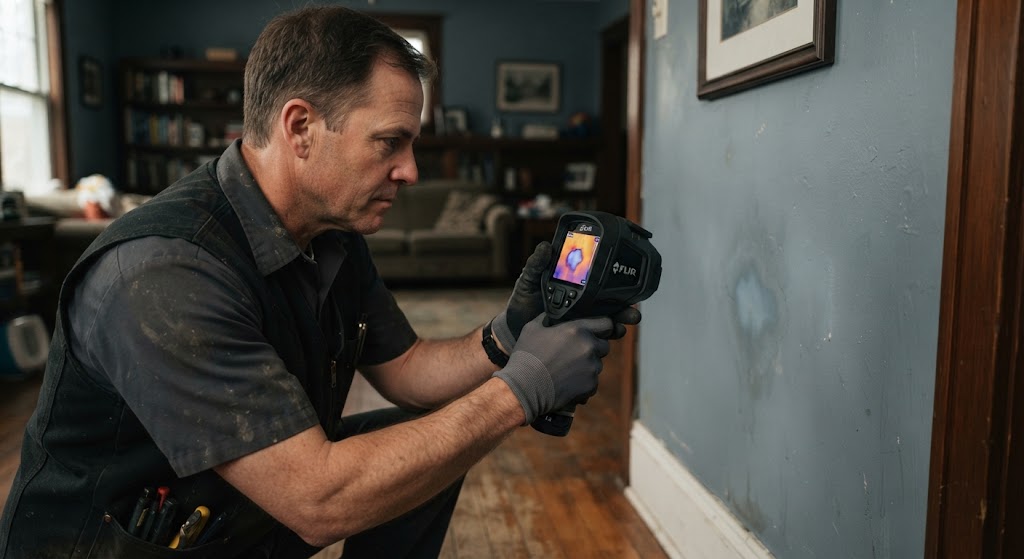
High-resolution infrared thermography scans wall surfaces, ceilings, and floors. Evaporative cooling patterns and hot water thermal signatures reveal moisture plumes behind building materials.
-
Acoustic Frequency Amplification & Listening
Using sensitive ground and contact microphones, we listen for the distinct acoustic frequencies generated by pressurized water spraying against drywall cavities or building framing.
-
Moisture Meter Calibration & Target Verification
Non-destructive radio frequency moisture meters confirm boundary saturation levels, allowing the specialist to mark the exact repair point down to a small, surgically accessible square.
Pinpoint the Exact Leak Location Before Cutting Drywall
Our non-invasive diagnostic equipment protects your home's finished walls and flooring. Speak directly with a local specialist.
Call (201) 510-1615What Happens After the Leak Is Found
Once our acoustic and thermal diagnostics pinpoint the precise failure location, we provide property owners with detailed diagnostic documentation. You will know exactly which pipe is compromised, its depth, and the cleanest access pathway.
With this clear road map, a licensed plumbing contractor can perform a surgical repair—opening only a single drywall square or localized floorboard rather than tearing apart entire rooms. In New Jersey, plumbing repairs require a NJ licensed master plumber to ensure compliance with uniform construction codes and safety standards.
Cost Factors for Concealed Leak Diagnostics
While exact diagnostic scopes vary based on building architecture, several technical factors influence the complexity of locating a hidden leak:
- Building Construction Materials: Locating water through reinforced concrete floor slabs or double plaster walls requires specialized acoustic sensors compared to standard drywall construction.
- Depth and Concealment: Pipes enclosed inside multi-story commercial shafts or buried beneath finished hardwood demand multiple testing methodologies.
- Single-Family vs. Multi-Unit Structure: Tracing leaks across shared utility risers in high-rises involves coordination and differential pressure testing across multiple floors.
Prevention Tips to Guard Against Future Water Leaks
Property owners can mitigate hidden leak risks by adopting proactive plumbing habits:
- Install a whole-house water pressure regulator to ensure incoming municipal water stays between 50 and 65 PSI. Excess pressure stresses pipe solder joints.
- During severe winter storms in Bergen County, maintain steady indoor heating and open vanity cabinets along exterior walls to allow warm air circulation around pipes.
- Monitor your water meter quarterly by taking a baseline reading before leaving the residence for several hours with all fixtures turned off.
When Is a Hidden Leak an Emergency?
If you observe water pooling through an active light fixture, rapid drywall bowing that threatens ceiling collapse, or the sound of rushing water accompanied by a spinning meter, treat the situation as an immediate emergency. Shut off the main water valve at your meter or curb stop, cut power to wet areas at your circuit panel, and call for emergency diagnostic guidance.
For comprehensive borough coverage, explore our Fort Lee service areas and learn how our diagnostic protocols support properties near Downtown Fort Lee, Palisade Avenue, and beyond. If you need local expert leak detection in Fort Lee, contact our team today. When you require professional hidden water leak detection Fort Lee specialists deliver reliable answers.
Frequently Asked Questions
How does acoustic listening detect a leak behind drywall?
Pressurized water escaping through a pinhole or cracked fitting creates high-frequency acoustic vibrations that resonate through copper, PEX, and surrounding wall studs. Sensitive ground and wall contact microphones amplify this noise, allowing the specialist to map the exact peak volume location.
Why is thermal imaging used for hidden water leaks?
Thermal cameras register subtle temperature differences on wall and ceiling surfaces caused by moisture evaporation or heated water pipes. This creates a distinct thermal footprint revealing the path and origin of trapped moisture without exploratory cutting.
What should I do if my water meter spins with all fixtures turned off?
A spinning meter indicates water is actively escaping somewhere in your pressurized supply system. Check toilets first for silent leaks, then call a leak detection specialist at (201) 510-1615 to isolate whether the breach is inside wall cavities, underground, or under a floor slab.