When moisture threatens your residential property or multi-family high-rise, prompt and accurate leak detection Fort Lee NJ homeowners and property managers rely on prevents catastrophic structural decay. Situated dramatically atop the Palisades overlooking the George Washington Bridge, Fort Lee presents a distinct architectural landscape where modern residential towers stand alongside historic post-war co-ops and charming single-family neighborhoods. Pinpointing pressurized water breaks behind reinforced concrete, finished plaster, or subflooring requires precise diagnostic technology rather than invasive guesswork.
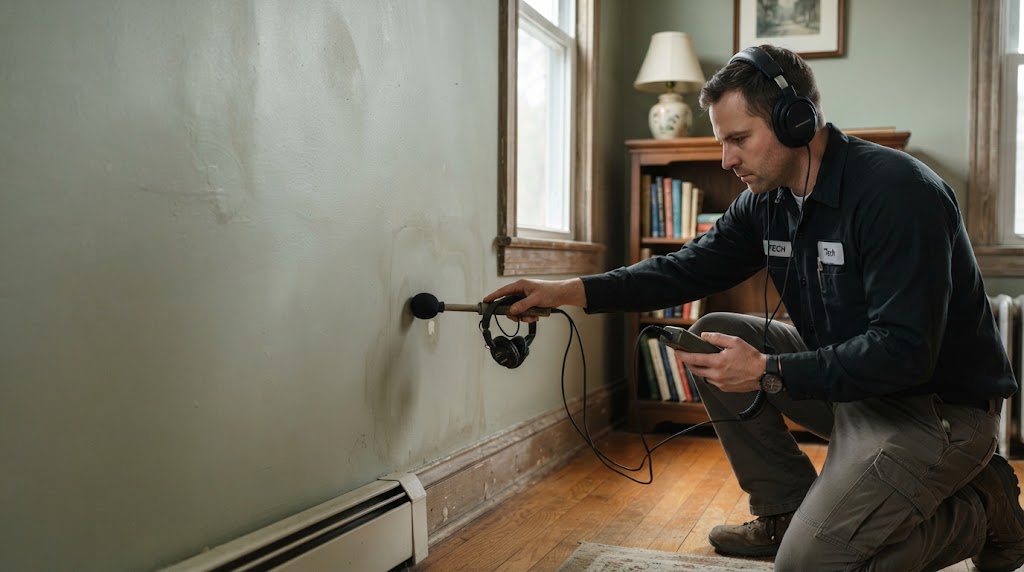
Precision Non-Invasive Leak Detection in Fort Lee Residential & High-Rise Properties
Unlike suburban areas with standalone dwellings on soft loam, Fort Lee is defined by vertical urban density and basalt cliff geography. In dense multi-story buildings along Palisade Avenue and near the Hudson Lights area, an unaddressed plumbing failure rarely stays confined to a single room. Pressurized potable lines, hydronic heating risers, and drainage stacks run through shared utility chases and concrete floor slabs. When water escapes, gravity and capillary action draw it across structural beams, making a ceiling drip in one apartment originate several units away or two floors higher.
Relying on traditional exploratory tearing of walls creates massive cosmetic disruption, elevated reconstruction costs, and unnecessary disputes between unit owners and condominium associations. Choosing a specialized leak detection company Fort Lee trusts eliminates the guesswork. Using sensitive electro-acoustic ground microphones, infrared thermal imaging cameras, correlator systems, and digital pipe tracer equipment, diagnostic specialists listen through dense drywall, hardwood flooring, and concrete subfloors. We isolate the acoustic signature of escaping water under pressure, pinpointing the exact failure point to a precise square foot.
Suspect an Active Water Leak in Your Fort Lee Home or Building?
Avoid unnecessary exploratory demolition. Speak directly with a diagnostic technician to identify the exact source before any structural cutting begins.
Call (201) 510-1615Common Water Leak Profiles Across Fort Lee Real Estate
The diverse housing stock across Fort Lee creates several recurring diagnostic scenarios that demand tailored detection protocols:
- Palisade High-Rise Riser & Stack Leaks: Decades-old vertical copper supply risers and cast-iron waste stacks experience internal galvanic corrosion and joint fatigue. Our non-invasive acoustic sensors track vibrations along vertical chases to differentiate between supply pressure breaches and intermittent drainage leaks.
- Multi-Story Unit-to-Unit Seepage: Bathroom pods, concealed shower pans, and kitchen sink rough-ins frequently leak into subfloors. Water pools silently on concrete decks before dripping through tenant ceiling drywall below.
- Single-Family Underground Water Line Fractures: In historic neighborhoods such as Coytesville and the Linwood Avenue corridor, subterranean copper or vintage galvanized service lines travel from the street curb stop through rocky Palisades soil. Freeze-thaw cycles during harsh New Jersey winters exert severe ground heave, causing underground fractures.
- Concealed Pinhole Pipe Punctures: Pinhole breaches in pressurized domestic water lines behind bathroom tiles or kitchen cabinetry produce continuous fine misting that rots wall studs and breeds concealed mold colonies.
Warning Signs Fort Lee Property Owners Must Watch For
Concealed plumbing leaks often provide subtle warning signs before catastrophic water damage occurs. Inspect your premises for these key indicators:
- Unexplained Spikes on Utility Bills: A continuous unexplained jump on your municipal water utility bill strongly indicates pressurized line loss.
- Water Meter Continuous Spin: If all faucets, appliances, and fixtures are turned off inside the residence and the low-flow indicator dial on your meter continues to turn, water is escaping somewhere in the plumbing network.
- Damp, Warped, or Discolored Drywall: Yellowish water rings on ceilings, peeling paint, or bubbling baseboards along hallway partitions.
- Warm Floor Patches on Tile or Hardwood: Hot water slab leaks or broken radiant heating lines create localized warm spots noticeable under bare feet.
- Persistent Musty Odors: Humidity trapped inside closed wall cavities breeds mildew even when standing water has not yet breached drywall surfaces.
- Hissing or Whispering Pipe Sounds: The faint, continuous acoustic hiss of pressurized water moving through pipes when no water fixture is open.
Don't Let Hidden Moisture Ruin Your Interior Spaces
Early identification limits structural drying costs and preserves delicate interior finishes. Schedule an accurate acoustic inspection today.
Call (201) 510-1615Comprehensive Water Leak Diagnostic Services in Fort Lee
We offer targeted diagnostic evaluations across seven core plumbing leak categories, ensuring rapid identification of the root cause:
Hidden Water Leak Detection
Acoustic frequency analysis and thermography pinpoint concealed moisture behind drywall, ceilings, and structural flooring without opening surfaces prematurely.
Explore Hidden Leak Services →Condo & Apartment Leak Detection
Specialized inter-unit acoustic tracking and riser testing for high-rise co-ops and condominiums, establishing definitive source documentation for building boards.
Explore Condo Leak Services →Pipe Leak Repair
Targeted diagnostic evaluation for pinhole copper perforations, corroded fittings, and winter freeze-damaged supply lines, preparing clear repair pathways.
Explore Pipe Repair Options →Water Line Leak Detection
Subsurface correlator listening identifies underground supply line breaks between the municipal curb stop and your foundation wall without destructive lawn trenching.
Explore Water Line Services →Sewer Line Leak Detection
High-resolution fiber-optic video camera inspections locate cracked cast-iron laterals, tree root penetrations, and sewer gas leaks along foundation perimeters.
Explore Sewer Inspection Services →Shower & Bathroom Leak Detection
Precision isolation testing differentiates between shower pan membrane failures, tub drain leaks, faulty mixing valves, and toilet wax ring breaches.
Explore Bathroom Leak Services →Emergency Leak Repair
Rapid diagnostic guidance for active burst pipes and catastrophic ceiling overflows to arrest water migration and safeguard structural building integrity.
Explore Emergency Services →Why Non-Invasive Technology Protects Fort Lee Architecture
Whether your property is a pre-war brick residence in Coytesville or a luxury condo overlooking the Hudson River near Route 4 and I-95, exploratory demolition is costly and messy. Knocking exploratory holes in walls creates drywall dust, damages custom wallpaper or imported tiles, and often misses the real source because water travels along horizontal framing.
With modern non-invasive leak detection Fort Lee property owners can bypass invasive guesswork. By combining acoustic sensors that hear pressurized leaks at 500 to 2,000 Hertz with calibrated thermographic cameras showing evaporative thermal anomalies down to 0.1°C, we provide unambiguous verification of the breach point. Once located, licensed plumbing contractors can execute a surgical repair, opening only the single tile or minimal drywall square needed. In New Jersey, plumbing repairs require a NJ licensed master plumber to ensure compliance with the state uniform construction code.
Our specialized services are strictly engineered for potable water, hydronic heating, and drainage line diagnostics. If you smell natural gas (a rotten-egg odor) or suspect a gas line breach, immediately evacuate all occupants from the building, do not operate light switches or electronics, and call PSE&G or 911 from outside the structure.
Local Communities and Neighborhoods We Serve in Fort Lee
We provide local leak detection services Fort Lee NJ residents rely on across every section of the borough, including:
- Downtown Fort Lee (Main Street): High-density commercial corridors, mixed-use buildings, and bustling retail properties where rapid leak detection near Downtown Fort Lee (Main Street) prevents retail downtime.
- Palisade Avenue Corridor: High-rise luxury towers, co-ops, and condominium complexes requiring sophisticated multi-unit acoustic isolation.
- Coytesville: North borough residential neighborhood featuring vintage single-family homes, classic foundations, and aging lateral water lines.
- Linwood Avenue Area: Tree-lined residential streets with mid-century ranches, split-levels, and detached residences vulnerable to freeze-thaw plumbing shifts.
- Hudson Lights & Bridge Plaza: Modern multi-story developments with complex concealed utility shafts and centralized domestic hot water loops.
We also serve adjacent eastern Bergen County communities including Edgewater, Cliffside Park, Englewood, Leonia, Palisades Park, and Englewood Cliffs. Learn more on our comprehensive Fort Lee service areas page.
Frequently Asked Questions About Fort Lee Leak Detection
How do technicians locate a water leak behind drywall without cutting it open?
Technicians use sensitive acoustic ground microphones, listening discs, and thermal imaging cameras. Pressurized water escaping through a microscopic hole generates distinct high-frequency vibrations that travel through building materials. Thermographic cameras then detect subtle surface temperature gradients caused by escaping water or evaporative cooling, confirming the leak's exact footprint before a single incision is made.
Who is responsible for a condo water leak in Fort Lee?
In Fort Lee condominiums and co-ops, responsibility typically depends on the exact origin point of the leak as defined in the building master deed and bylaws. Common supply risers and main drainage stacks inside communal pipe chases are generally the association's responsibility, while fixture shutoff valves, branch lines serving only one unit, and shower pans are usually the individual owner's responsibility. Non-invasive acoustic testing pinpoints the exact boundary point to resolve ownership questions quickly.
What should I do first if I see water dripping through my ceiling?
Immediately place a container under the drip to catch falling water. If the leak is dripping from an electrical fixture or near an outlet, shut off power to that circuit at the main breaker. Next, shut off your main water valve (or alert your upstairs neighbor or building superintendent if in a multi-family building), and call a diagnostic leak detection specialist at (201) 510-1615.
Can cold New Jersey winters cause hidden pipe leaks in Fort Lee?
Yes. Severe winter freezes in northern New Jersey often penetrate exterior-facing wall cavities, uninsulated crawl spaces, and exterior hose bibb supply runs. Water expands as it freezes, creating hairline splits in copper or rigid plastic lines that only begin actively leaking once the ice thaws and water pressure returns.
If you need an experienced plumbing leak detection Fort Lee NJ specialist to inspect your home, condominium, or commercial facility, talk directly with our diagnostic team today. We provide the technical clarity required to find water leak Fort Lee properties experience before secondary water damage escalates. When you need comprehensive Bergen County leak detection, call us immediately.